Renting in the UK: How to Spot a Scam Listing Before You Send a Deposit in 2026
By Sophia Tan
May 15, 2026
To spot a UK rental scam in 2026, check three things before sending a penny: that the deposit will be protected in a government-approved scheme (DPS, MyDeposits, or TDS), that you can verify the landlord’s identity and the property’s address via Land Registry, and that you’ve seen the flat in person or on a live video call. If any of those break down — walk away. The scams hitting international students this year are slicker than ever, with AI-generated interior photos and cloned Rightmove listings, but they all collapse the moment you demand verifiable paperwork.
Why International Students Are the #1 Target in 2026
Scammers love students who are still abroad. You can’t view in person, you’re under pressure to lock in housing before term starts, and you don’t yet know what a “normal” London or Manchester rent actually looks like. Action Fraud data shows reported rental fraud jumped roughly 24% year-on-year heading into 2026, with the average loss to a student victim sitting around £1,400 — usually one month’s rent plus a “holding deposit.”
The pattern is depressingly consistent. A first-year from Lagos or Shanghai finds a beautiful one-bed in Zone 2 London for £950 a month. The “landlord” is “working in Dubai” and asks for a deposit via international transfer to hold the property. The flat doesn’t exist — or it exists, but belongs to someone else entirely.
Laptop displaying a blurred property listing with a coffee mug beside itStudent calmly making a phone call at a desk after reporting fraud
The Six Red Flags That Should Stop You Cold
Most scams trip at least three of these wires. Spot one, get cautious. Spot two, walk away.
Price 20%+ below market. A £1,800 area flat going for £1,200 isn’t your lucky day.
“I’m abroad and can’t do viewings.” The single most common scam opener in 2026.
Pressure to pay a holding deposit within 24 hours “because another student is interested.”
Payment requested by international wire, crypto, or to a personal account not matching the landlord’s name on the contract.
Photos that feel oddly generic — perfectly staged, no clutter, lighting too clean. Reverse-image search them.
The “landlord” communicates only via WhatsApp or Gmail, never from a letting agency domain.
A real-world example: a Master’s student we spoke to last autumn found a “studio in Shoreditch” for £1,050. The listing photos were stunning. A 30-second reverse image search showed the same interior on a Spanish Airbnb from 2022. Cost of that search: zero. Cost of skipping it: would’ve been £2,100.
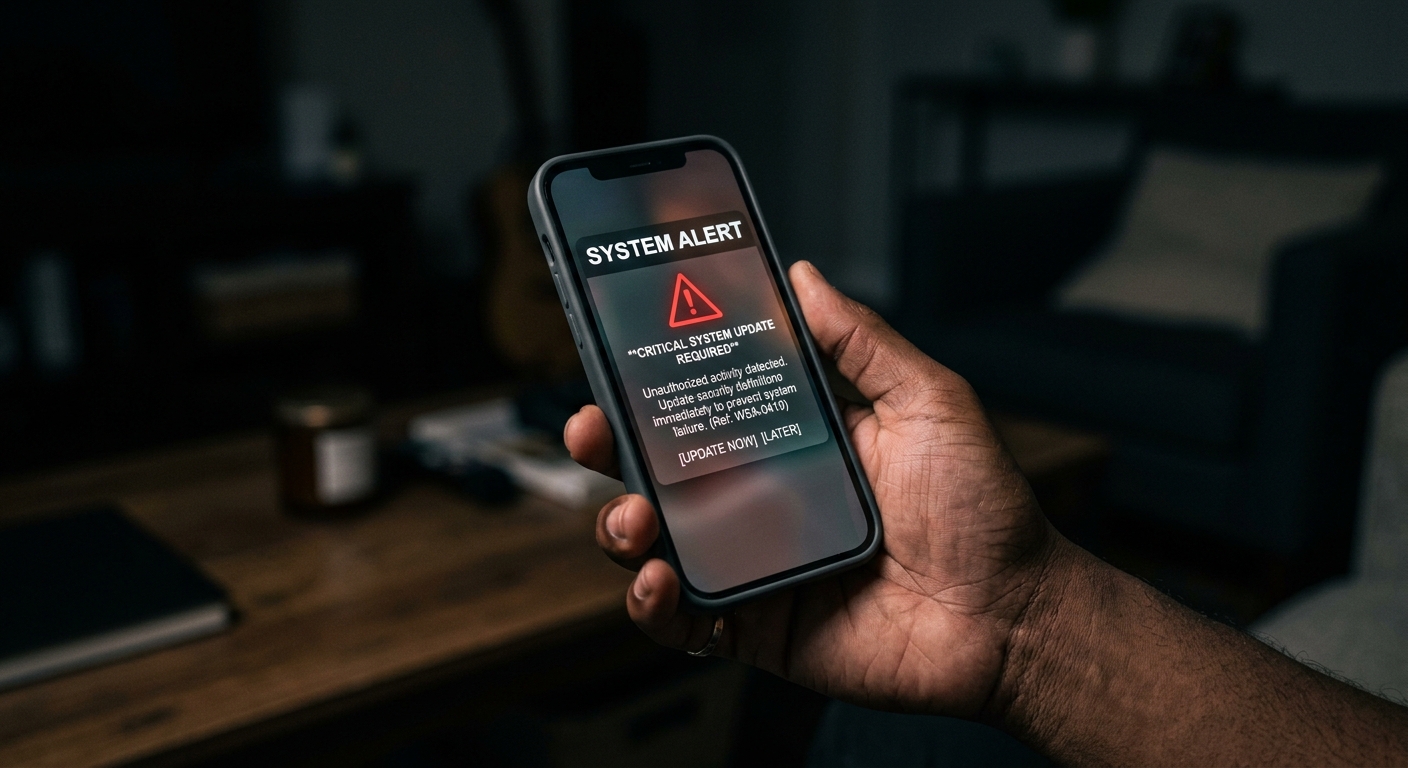
Hand holding a smartphone showing a fraud warning notification
How to Verify a Landlord in Under 15 Minutes
You don’t need to be a detective. You need three open browser tabs.
1. Land Registry title check (£3)
At gov.uk/search-property-information, you can buy a title register for the property address. It tells you who legally owns it. If the name doesn’t match the person asking for your money, that’s a wrap.
2. Letting agent verification
Every legitimate letting agent in England must belong to a redress scheme — either The Property Ombudsman or the Property Redress Scheme. Search the agent’s name on both registries. No result = no agent.
3. Deposit scheme pre-check
Ask the landlord, in writing, which deposit protection scheme they’ll use: DPS, MyDeposits, or TDS. A real landlord will answer instantly. A scammer will dodge, deflect, or invent a scheme name.
The AI-Generated Listing Problem (New for 2026)
Here’s what changed this year. Scammers now use generative AI to produce photorealistic interior photos of flats that don’t exist. Reverse image search no longer catches these — the images are technically unique.
Three tells still give them away:
Architectural impossibilities. Windows that don’t align with the building’s exterior. Radiators floating mid-wall. Door frames that taper.
Text artefacts. Book spines with gibberish lettering, kitchen appliance brands that don’t exist, plug sockets with four pins.
Lighting that contradicts the floor plan. Sun streaming in from two opposite walls at once.
Ask for a live video walkthrough on WhatsApp or FaceTime — and ask the person to open a specific cupboard, look out a named window, or show today’s newspaper. A scammer can’t fake that on the fly. A real landlord will laugh and do it.
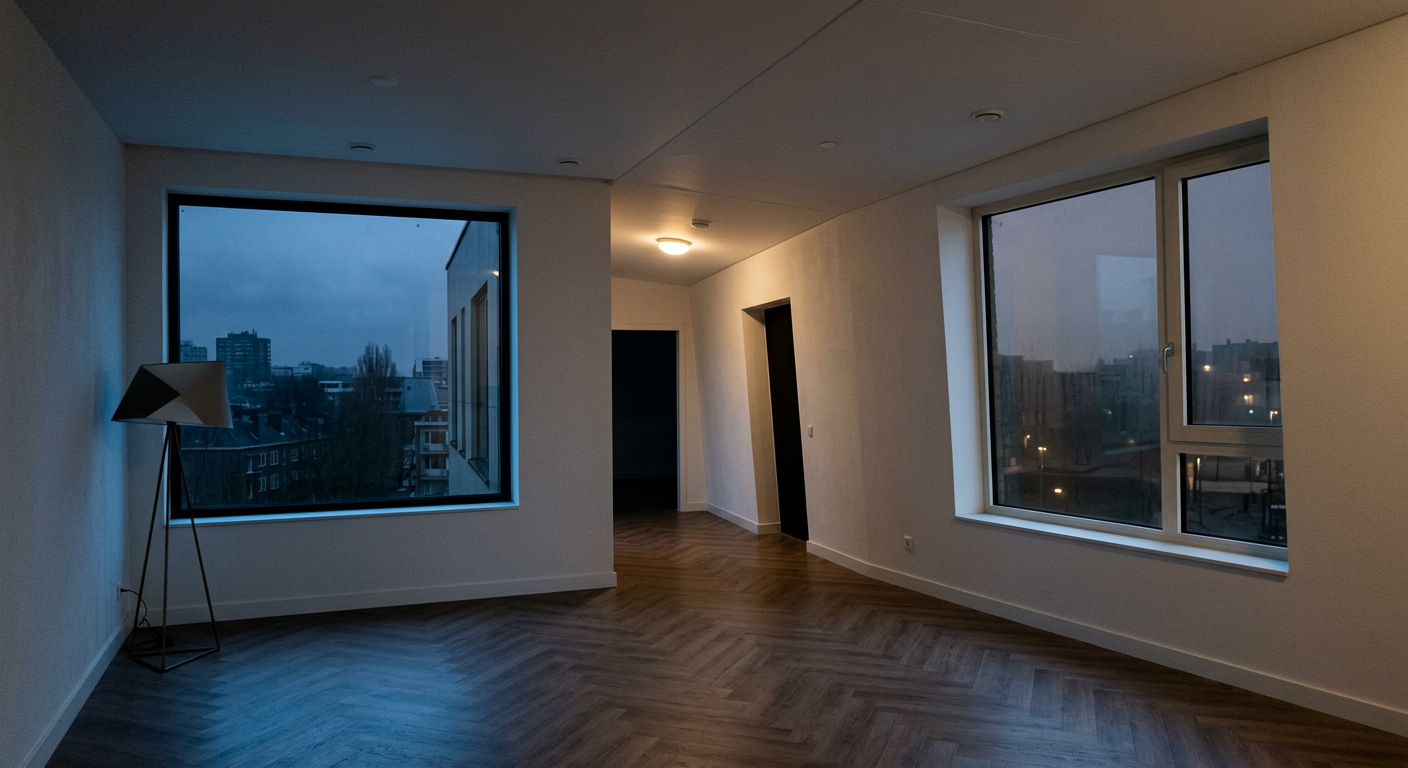
Suspiciously perfect modern apartment interior with subtle visual inconsistencies
Safe Payment Rules — Memorise These
The deposit itself is where 95% of money is lost. Bake these rules into your decision-making:
Never pay before signing an Assured Shorthold Tenancy (AST) agreement. A “holding deposit” before paperwork is the classic exit point for scammers.
Holding deposits are legally capped at one week’s rent under the Tenant Fees Act. Anyone asking for a month upfront just to “reserve” the room is breaking the law.
Pay only into a UK bank account matching the name on your contract or the registered letting agency.
Use a Faster Payments transfer from a UK bank where possible — it creates a clear paper trail and gives your bank’s fraud team something to investigate.
Within 30 days of paying your deposit, you must receive prescribed information with the scheme name and reference number. No info = report immediately.
Consider this scenario: a student transferred £1,600 via international wire to a “landlord” in “Manchester.” The money landed in a Romanian account within 90 seconds. UK banks have a 24-hour scam reversal window for domestic transfers — international wires don’t. That single choice cost her the entire amount.
Hand pausing over laptop keyboard before confirming a bank transfer
Platform-Specific Scams: Where They Hide
SpareRoom and OpenRent
Both platforms have verification badges. A listing without a verified phone number or ID badge in 2026 should be treated with extra suspicion. The scam pattern here: legitimate-looking listing, conversation moves off-platform to WhatsApp within two messages.
Facebook Marketplace and student groups
This is the wild west. University-name Facebook groups are infiltrated by scammers who copy real Rightmove listings, drop the price by 25%, and post under fake student profiles. Cross-reference every Facebook listing against Rightmove and Zoopla by address.
Rightmove and Zoopla
Generally safer because agents are vetted, but cloned listings do appear. The scam: a real listing exists, but you’re emailing a fake agent who’s spoofed the agency’s domain. Always call the agency on the phone number listed on their official website — not the one in the email.
What to Do If You’ve Already Paid
Move fast. The first hour matters more than the next week.
Call your bank’s fraud line immediately — not customer service. Use the number on the back of your card. Ask them to invoke the Contingent Reimbursement Model (CRM) Code for authorised push payment fraud.
Report to Action Fraud at actionfraud.police.uk or 0300 123 2040. You’ll get a crime reference number that banks and insurers need.
Report the listing to the platform — SpareRoom, Rightmove, and Facebook all have fraud reporting tools that take listings down within hours.
Contact your university’s international student support office. Most have emergency accommodation funds and can put you in temporary housing while you sort things out.
You should also speak to someone who knows the UK rental landscape and isn’t emotionally invested in the deal. Our student support team handles these cases regularly and can help you talk to your bank, your university, and Action Fraud in the right order.
Build a Pre-Deposit Checklist You’ll Actually Use
Print this. Stick it on your wall. Tick every box before any money leaves your account.
☐ I have viewed the property in person OR done a live video walkthrough with property-specific verification tasks
☐ I have the landlord’s full legal name and verified it against Land Registry
☐ The letting agent (if any) is listed on a redress scheme
☐ I have a signed AST contract with my name and the correct property address
☐ I know which deposit protection scheme will be used
☐ Payment is going to a UK bank account in the matching name
☐ I have screenshots of every message exchanged
☐ The price is within 15% of comparable listings on Rightmove and Zoopla
☐ I have not been pressured to pay within 24 hours
If you’re still in the planning stage and want a wider read on settling into UK life — including learning the local rental vocabulary that scammers often misuse — our British slang survival kit and expert guide to studying in the UK are good companions.
Trust the Process — and Trust Your Gut
Rental scams work because they exploit urgency. Term starts in three weeks. Your visa is approved. Your parents are anxious. The “landlord” says someone else is interested. In that pressure cooker, a 25% discount feels like fate. It isn’t — it’s the bait.
The students who avoid losing money aren’t smarter. They just slow down by 48 hours, verify three things, and accept that if a flat is genuinely meant for them, it’ll still be available tomorrow. Anything that won’t survive 48 hours of due diligence wasn’t real to begin with.
If you’d rather not navigate this alone, Eduviai works directly with vetted student accommodation providers across the UK and supports international students from application through arrival. Have a look at how we work, or get in touch if you want a second pair of eyes on a listing before you send anything.
Sophia Tan
Sophia Tan is an international education consultant at Eduviai. Having studied and worked across three UK cities herself, she writes practical guides that help students weigh tuition, lifestyle, and career outcomes side by side. When she's not advising applicants, she's usually testing out new student cafés in Manchester's Northern Quarter.
Tell us a bit about your child and what you're looking for. We'll help you explore schools that match your requirements, whether you already have a shortlist or you're just starting.

 About UsHonest, expert guidance for international families. Never commission-driven.Discover
 How We WorkFrom your first visit to the first day at school, we guide every step.Discover
 Application GuideFrom documents to offer letter, the UK application process made clear.Discover
 Our PriceOne straightforward service fee. No school commissions, ever.Discover
 Testimonials1,200+ students from 40+ countries. Read their stories.Discover
 Behind the PlatformMeet the team behind EduviaiDiscover
 Find a SchoolTell us about your child and we’ll match you with verified UK schools that fit.Discover
 To study in the UKFrom age 4 to postgraduate, every stage, qualification, and admissions route explained.Discover
 Life in the UKAccommodation, culture, transport, and budgeting for international students, all in one place.Discover