Opening a UK Bank Account as an International Student: The Step-by-Step Guide for 2026
By Sophia Tan
May 15, 2026
To open a UK bank account as an international student in 2026, you need three things: your passport, your university confirmation letter (CAS or enrolment proof), and a UK address. Most high-street banks will process the application in 1–3 weeks, but digital banks like Monzo and Starling can give you a working account on your phone within a day. The trick is knowing which route fits your timeline — and avoiding the documentation mistakes that send applications back to square one.
Why a UK Bank Account Matters More Than You Think
It’s not just about paying for groceries. Without a UK account, you’ll lose 2–4% on every international card transaction, struggle to set up a mobile contract, and find it harder to rent a flat after your first year in halls.
UK landlords almost always ask for a UK bank statement when they run referencing checks. Part-time employers — the corner shop, the campus library, the café — won’t pay foreign accounts. And some scholarship providers and the Student Loans Company simply refuse to transfer funds outside the UK banking system.
For instance, a Chinese postgraduate at Manchester arriving in September might burn through £80 in unnecessary FX fees in the first month alone if she keeps using her home debit card. That’s a week of food shopping gone.
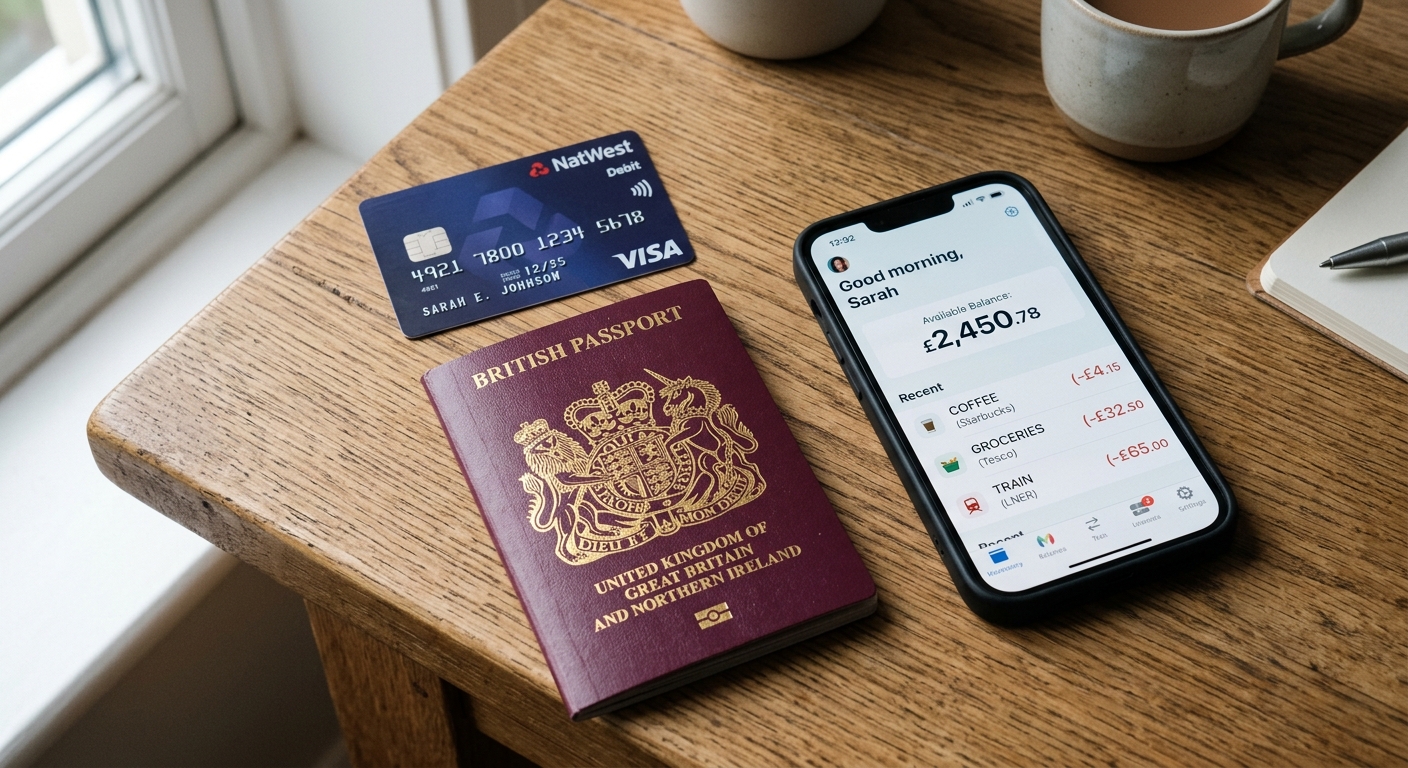
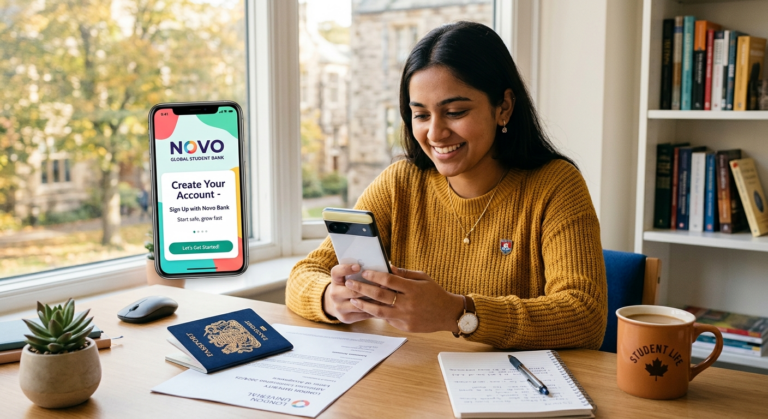
UK debit card, passport and banking app on a desk
The Documents You Actually Need in 2026
Banks have tightened ID checks since 2023, but the core list is stable. Bring originals — photocopies alone won’t cut it at a branch.
The non-negotiables
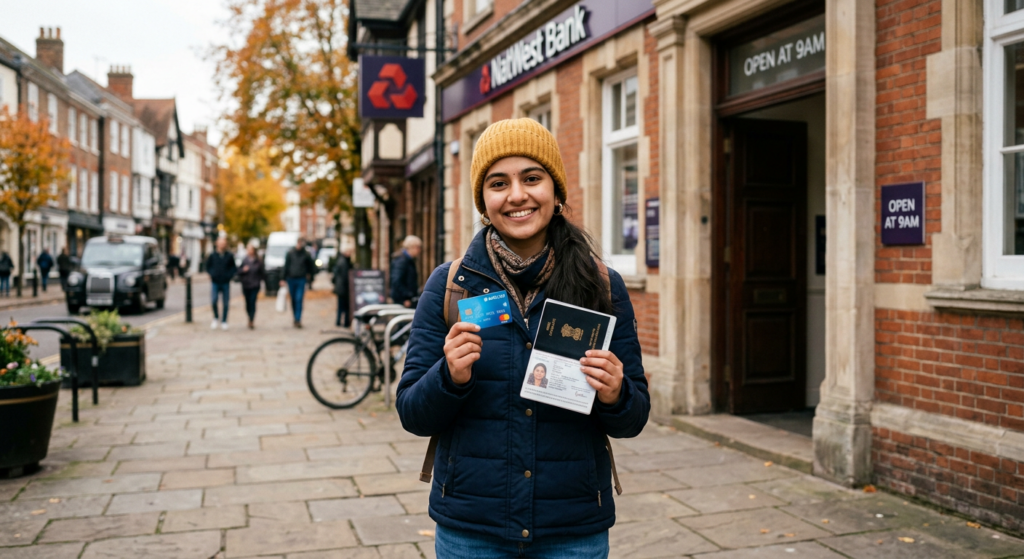
Valid passport with your student visa vignette or eVisa share code
BRP card (if issued) or proof of your eVisa status via the gov.uk share code service
University enrolment letter — must be dated within the last 3 months and state your course, start date, and term-time UK address
Proof of UK address — your halls contract, tenancy agreement, or a council tax letter
The ones people forget
A second proof of home country address (utility bill or bank statement under 3 months old)
Your CAS letter — some banks still ask for this alongside the enrolment confirmation
If you haven’t moved into accommodation yet, ask your university’s international office for a bank introduction letter. Most UK universities issue these for free and they’re explicitly designed to satisfy the “proof of address” requirement when you don’t have utility bills yet. Our application guide walks through which universities issue these automatically and which require a request.
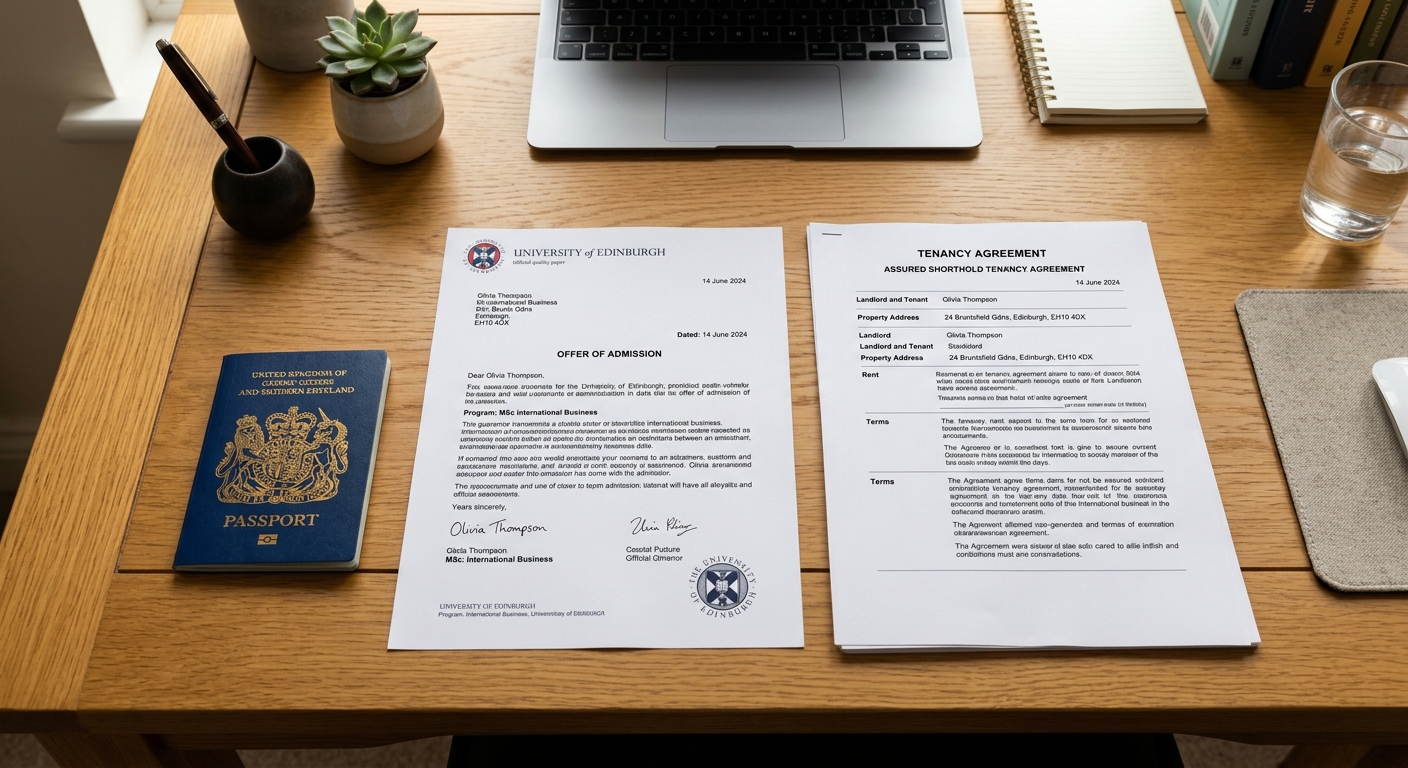
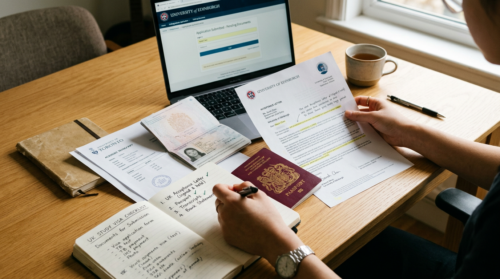
Required documents for opening a UK student bank account
Which Bank Should You Actually Choose?
Honest answer: it depends on how fast you need an account and how much money will pass through it. Here’s the short version.
HSBC International Student Account
The best option if you’re transferring large sums from home — say, paying £20,000+ tuition in instalments. HSBC’s global network means a transfer from an HSBC account in Hong Kong, Mumbai or Dubai often lands the same day with low fees. Downside: branch appointments in September fill up fast.
Barclays Student Additions
Reliable, widely accepted, and the app is genuinely good. Their interest-free overdraft up to £1,500 in year one is useful if cash flow gets tight between scholarship payments.
Santander 123 Student
Pays cashback on household bills (1–3%) and includes a 4-year railcard. If you’re studying outside London and will commute home or to other UK cities, the railcard alone pays for the relationship.
Monzo and Starling — the digital shortcut
Open on your phone in 10 minutes with just your passport and a selfie. No UK address proof required for the basic account. Perfect as your first account on arrival — then add a traditional bank later for overdrafts and large transfers.
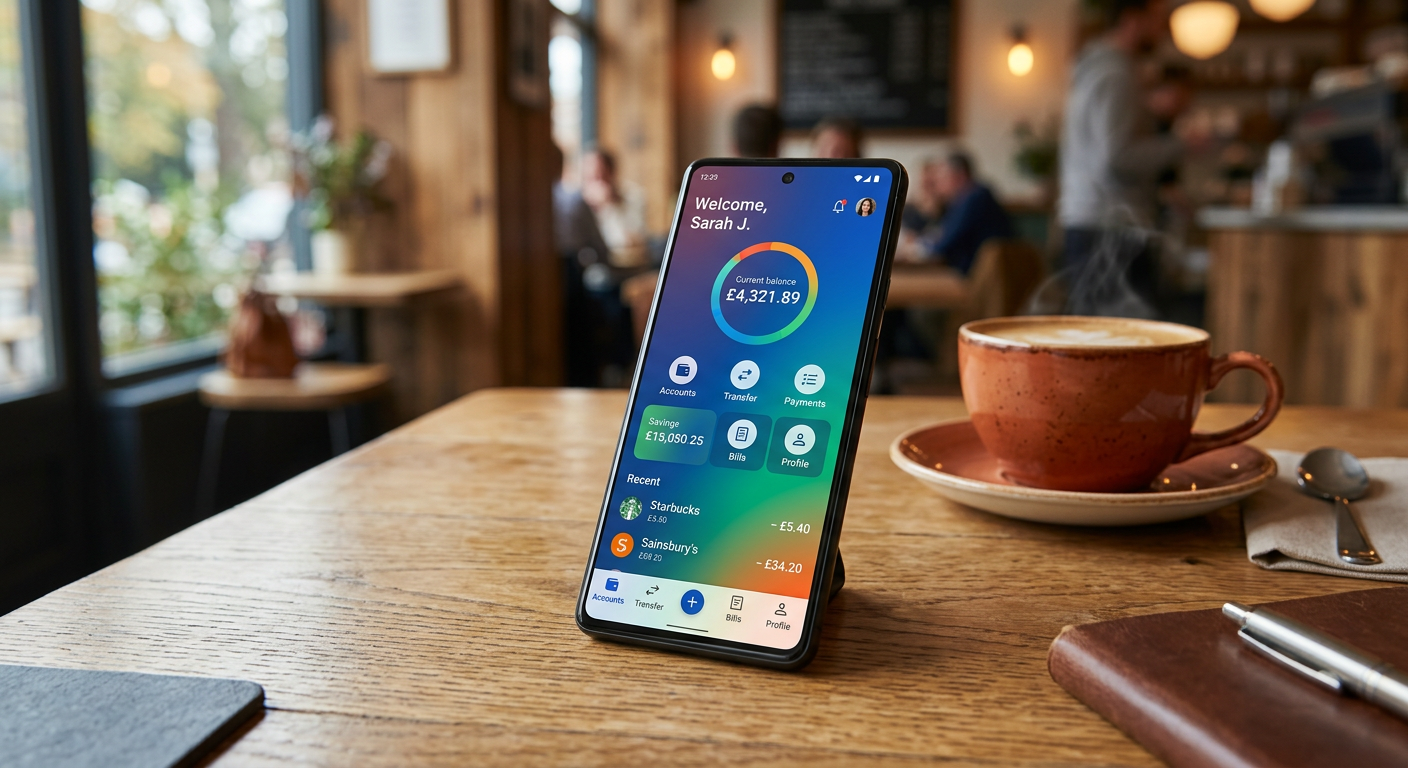
Mobile banking app on a smartphone in a café
The Step-by-Step Application Process
Step 1: Book before you fly
HSBC, Barclays and Lloyds all let you start the application from overseas up to 3 months before your course begins. Do it. You’ll skip the September queues entirely.
Step 2: Open a digital account on day one
The moment you have UK Wi-Fi, download Monzo or Starling. You’ll have a virtual card within hours and a physical card posted to your address within a week. This gets you spending without FX fees while your “main” account is being processed.
Step 3: Book your branch appointment
Most high-street banks now require an appointment for student accounts — walk-ins are rarely accepted. Book online via the bank’s website, choosing a branch near campus rather than a busy city-centre one.
Step 4: Attend the appointment
Bring every document listed earlier. Expect the meeting to take 30–45 minutes. The banker will scan your ID, confirm your enrolment, and complete a soft credit check.
Step 5: Wait for the card and PIN
These arrive separately in the post, usually 5–10 working days apart. Activate the card via the app or by calling the activation line — don’t try to use it at an ATM first or it may lock.
Student meeting with a bank advisor at a branch
Common Mistakes That Delay Applications
About 1 in 5 student applications gets bounced back. Almost always for the same reasons.
Address mismatch. Your enrolment letter says one address, your tenancy says another. Banks flag this immediately. Fix: ask your university to reissue the letter with your current address before applying.
Expired BRP or visa. Banks need at least 6 months of validity remaining. Short visa? Use a digital bank instead — they’re more flexible.
Name format differences. If your passport shows “WANG Xiaoming” but your university enrolled you as “Xiaoming Wang”, the automated check fails. Ask the university to match the passport order exactly.
Applying too early. Some banks won’t process applications more than 3 months before your course start date. Check the cut-off before booking.
One Eduviai-supported student last year — a master’s candidate at Edinburgh — had his Barclays application rejected twice because his halls hadn’t issued the tenancy contract yet. The fix was a one-page university bank letter, sent by email to the branch manager. Account opened within 4 days.
Sending Money From Home Without Losing a Fortune
Once the account is open, the next trap is the transfer itself. Your home bank’s “international wire” service is almost always the worst-value option — you can lose 3–5% in hidden FX margin.
Better routes
Wise — mid-market exchange rate, usually 0.4–0.7% total cost, money arrives in 1–2 days
Revolut — free up to a monthly limit, useful for smaller top-ups
HSBC Global Transfers — free between HSBC accounts in different countries, ideal if your parents bank with HSBC
For tuition specifically, check whether your university has signed up with Flywire or Convera. These are platforms designed for student fees that often beat retail bank rates and give you a guaranteed amount in GBP.
What to Do If You’re Refused
It happens. A refusal isn’t the end — but the reason matters.
If it’s a documentation issue
Easy. Get the missing or corrected paperwork and reapply, ideally with a different branch of the same bank. A polite phone call to the international student team often unlocks faster handling.
If it’s a credit-check issue
Newcomers have no UK credit history, which sometimes triggers a soft decline at banks with stricter risk models (NatWest is the usual culprit). Switch to a bank with a dedicated international student product — HSBC and Barclays are designed around this exact scenario.
If it’s a visa-length issue
Short-term study visas (under 6 months) often disqualify you from full current accounts. Use Monzo, Starling, or Revolut for the duration — they work on simpler ID checks and require no minimum visa length.
If you’re applying through Eduviai, our support team can liaise with university international offices to obtain the introduction letters most banks accept as overriding documentation.
Timeline: What a Realistic First Month Looks Like
Here’s a week-by-week breakdown most students actually experience.
Week -2 (still at home): Start HSBC or Barclays application online. Gather your CAS, enrolment letter, and passport scans.
Week 1 (arrival): Open Monzo on day one. Move into accommodation, collect BRP from designated post office.
Week 2: Book branch appointment. Get bank introduction letter from your university’s international office.
Week 3: Attend appointment. Set up Wise account for transfers from home.
Week 4: Card and PIN arrive. Set up direct debits for phone contract, gym, and any utility bills.
By the end of month one, you should have one digital account for daily spending, one traditional account for receiving large transfers and building UK financial history, and one cheap transfer service connecting your home funds to both. That’s the setup. Anything more is over-engineering.
Your Next Step
The fastest path to a working UK bank account in 2026 is parallel processing: digital account on arrival, traditional account application started before you fly, and a Wise account ready for the first transfer from home. Get those three running in the first fortnight and you’ll never queue at a branch in your gown.
Eduviai helps international students sort the practical side of UK study — bank letters, accommodation references, application paperwork — so you can focus on settling in. Browse our expert guide to studying in the UK or get in touch if you’d like a hand getting your documents in order before term starts.
Sophia Tan
Sophia Tan is an international education consultant at Eduviai. Having studied and worked across three UK cities herself, she writes practical guides that help students weigh tuition, lifestyle, and career outcomes side by side. When she's not advising applicants, she's usually testing out new student cafés in Manchester's Northern Quarter.
Tell us a bit about your child and what you're looking for. We'll help you explore schools that match your requirements, whether you already have a shortlist or you're just starting.

 About UsHonest, expert guidance for international families. Never commission-driven.Discover
 How We WorkFrom your first visit to the first day at school, we guide every step.Discover
 Application GuideFrom documents to offer letter, the UK application process made clear.Discover
 Our PriceOne straightforward service fee. No school commissions, ever.Discover
 Testimonials1,200+ students from 40+ countries. Read their stories.Discover
 Behind the PlatformMeet the team behind EduviaiDiscover
 Find a SchoolTell us about your child and we’ll match you with verified UK schools that fit.Discover
 To study in the UKFrom age 4 to postgraduate, every stage, qualification, and admissions route explained.Discover
 Life in the UKAccommodation, culture, transport, and budgeting for international students, all in one place.Discover