British Slang Survival Kit: 40 Phrases You’ll Hear in Your First Week in the UK
By Sophia Tan
May 15, 2026
If you want a one-line survival rule for British slang: “You alright?” is a greeting, not a question — just say “yeah, you?” back. Most confusion in your first week in the UK comes from a small core of phrases that locals use on autopilot, from the cashier at Tesco to the lecturer running your induction. Learn these 40 expressions and you’ll stop nodding blankly and start actually participating in conversations.
The Greetings That Aren’t Really Questions
Brits open conversations with what sound like questions but are functionally just “hello”. Answering them literally will mark you as a tourist within seconds.
You alright? / Y’alright? — A greeting. Reply: “Yeah, you?”
How’s it going? — Same thing. Don’t describe your day.
Hiya — Casual hello, especially in the North.
Alright mate? — Hello, with a friendly nudge.
What you up to? — Genuinely asking, but expects a one-line answer like “just heading to the library”.
For instance, a student from Shanghai walking into a Greggs on her second morning was asked “y’alright love?” by the cashier — she launched into an honest answer about her jet lag and got a confused stare. The cashier just wanted to take her order. Reply with “yeah, can I get a sausage roll please?” and you’re sorted.
British high-street cafe counter with pastries and warm lighting
Money Talk: Quid, Tenner and Splitting the Bill
You will rarely hear the word “pounds” in casual conversation. Brits have their own slang stack for cash, and you’ll need it the first time you split a curry bill.
Quid — A pound. “That’ll be eight quid.” Never pluralised: it’s “eight quid”, not “eight quids”.
Fiver — £5 note.
Tenner — £10 note.
A score — £20 (less common now, but older landlords still say it).
Skint — Broke. “I’m skint till payday.”
Splash out — Spend more than usual on something nice.
Dosh / brass / wonga — Slang for money in general.
If managing your budget feels overwhelming in week one, our expert guide to study in the UK breaks down realistic monthly costs city by city.
British pound coins and a ten pound note on a wooden cafe table
Feeling Tired, Drunk or Done with Everything
British English has an oddly rich vocabulary for being exhausted or worse for wear. You’ll hear these constantly during freshers’ week.
Knackered — Completely exhausted. Default word after a long day.
Shattered — Same as knackered, slightly more dramatic.
Cream-crackered — Cockney rhyming slang for knackered. Yes, really.
Pissed — Drunk (NOT angry — that’s American English).
Tipsy — Slightly drunk.
Hammered / smashed / plastered — Very drunk.
Hungover / rough — The morning after. “I feel rough.”
Quick warning: if you tell a British classmate you’re “pissed” because you missed your bus, expect raised eyebrows. The word you want is “annoyed” or “fed up”.
Food, Pubs and the Sacred Cheeky Nando’s
Food vocabulary trips up almost every newcomer. “Chips” means hot fries; “crisps” are what Americans call chips. Easy to mix up at the counter.
Brew / cuppa — A cup of tea.
Bevvy — An alcoholic drink.
Chippy — Fish and chip shop.
Local — The pub closest to where you live, treated almost like family property.
Roast — Sunday roast dinner, a borderline religious institution.
Cheeky Nando’s — A spontaneous, slightly indulgent trip to Nando’s. The word “cheeky” here means impulsive, not rude.
Scran / nosh / grub — Food.
Pint — 568ml of beer, and the basic unit of British social life.
A real-world example: a postgrad from Mumbai joined his lab group’s WhatsApp and saw “cheeky pint after work?” on a Thursday. He thought it was a formal event and dressed smart. It was three colleagues in jeans at the pub round the corner. “Cheeky” almost always means casual and unplanned.
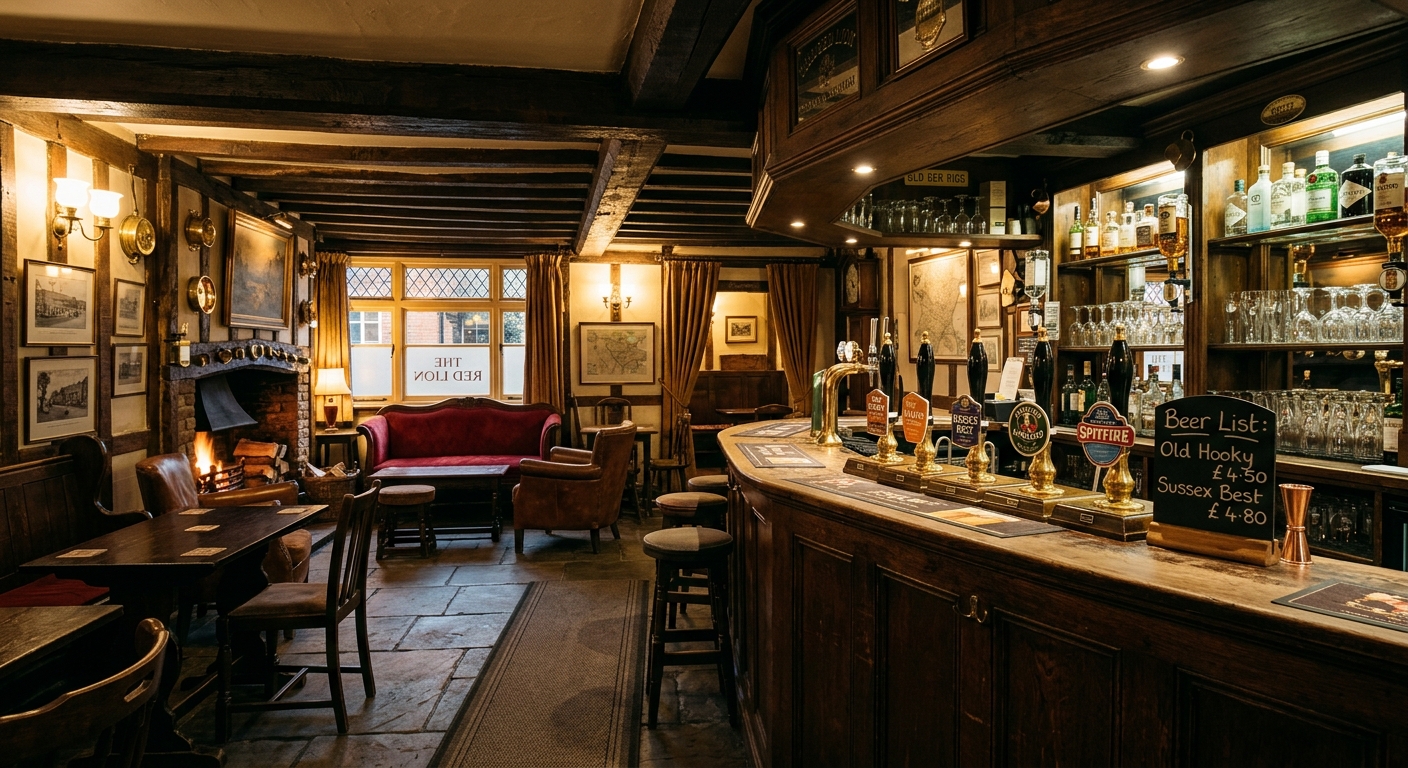
Traditional British pub interior with wooden bar and hand-pulled beer taps
Banter, Taking the Mick and Reading Sarcasm
Brits show affection through teasing. If your new flatmates mock your accent or your cooking, that’s usually a good sign — they like you. Silence is the warning sign, not jokes.
Banter (or bants) — Playful, mocking conversation between friends.
Taking the mick / taking the mickey — Teasing someone.
Winding you up — Joking, pulling your leg. “He’s winding you up, mate.”
Having a laugh — Joking around. “Are you having a laugh?” = “Are you serious?”
Daft — Silly, but affectionately. “Don’t be daft.”
Sound — Good, fine, reliable. “He’s sound.”
The trickiest part is sarcasm delivered with a completely flat face. “Oh brilliant, the printer’s broken again” said in a monotone is not enthusiasm. When in doubt, watch what everyone else does and follow the lead.
Weather, Transport and Daily Annoyances
British people complain about weather and trains the way other cultures discuss the news. Memorise these and you’ll have small-talk material for life.
Bucketing it down / chucking it down — Raining hard.
Drizzle — Light, persistent rain. The British default.
Baltic — Freezing cold.
Boiling — Hot (often used at 22°C, which is not actually hot).
Dodgy — Suspicious or unreliable. “That kebab looked dodgy.”
For more on navigating practical day-to-day adjustments — from registering with a GP to opening a bank account — have a look at our application guide resources.
Rainy London street with red double-decker bus and wet pavement reflections
Words That Mean Good — and Words That Don’t
Brits have an entire dictionary of synonyms for “good” and almost as many for “bad”. Tone matters more than the word itself.
Positive
Brilliant — Great. Used constantly, often sarcastically.
Ace — Excellent (more common in the North).
Mint — Really good. “Those trainers are mint.”
Lush — Lovely (especially Welsh and Bristol usage).
Proper — Genuinely, really. “That’s a proper good film.”
Negative
Naff — Tacky, low quality.
Pants — Rubbish. “The match was pants.”
Rubbish — Bad, but also literal trash.
Gutted — Deeply disappointed. “I’m gutted we lost.”
A nuance worth catching: “not bad” in British English usually means “actually quite good”. “Quite good”, weirdly, often means “mediocre”. Understatement is the national sport.
Polite Phrases That Mean Something Different
British politeness can be a trap. The words sound kind; the meaning is often the opposite. Decode these correctly and you’ll save yourself a lot of confusion in seminars, group projects, and flat-share negotiations.
“With all due respect” — I’m about to disagree with you firmly.
“That’s interesting” — Often means “I disagree but won’t say so”.
“I might join you later” — I’m not coming.
“Sorry” — Said roughly 50 times a day. Means anything from genuine apology to “please move” to “excuse me, you bumped into me”.
“Not to worry” — Used to wave away both real and trivial problems.
“I’ll bear it in mind” — I’ve already forgotten it.
For example, an international student got feedback from her tutor saying “this is quite an interesting first draft” and assumed it was a compliment. The actual subtext: it needs significant revision. Once she learned to read the code, her grades climbed noticeably the next term.
University seminar room with notebooks and coffee on a wooden table
How to Pick It All Up Faster
You don’t need to memorise a phrasebook. Slang sticks fastest through exposure and small, low-stakes practice.
Watch British TV with subtitles.Peep Show, Derry Girls, Gavin & Stacey, and The Inbetweeners are dense with everyday slang across regions.
Listen to local radio. BBC Radio 1 and regional stations expose you to current expressions national TV often misses.
Join one society outside your course. Sports clubs and hobby societies force conversation in casual English — not academic English.
Ask, don’t guess. “Sorry, what does that mean?” is welcomed by almost every Brit. They love explaining their own oddities.
Mirror, don’t imitate. Pick up phrases naturally over time. Forcing “blimey guv’nor” in week one will earn you teasing, not friendship.
Regional accents add another layer entirely. A Geordie in Newcastle, a Scouser in Liverpool, and a Glaswegian will all sound dramatically different from each other — and from the BBC newsreader you practised with. That’s normal. Give your ear two or three months.
Your First-Week Cheat Sheet
If you only remember a handful of these, make it this set: cheers (thanks/bye), you alright? (hello), quid (pound), knackered (tired), sound (good/fine), cheeky (casual/impulsive), and faff (hassle). These seven words alone will carry you through most daily interactions in your first week.
Beyond that, give yourself permission to misunderstand things. Brits expect international students to ask — what they don’t expect, and find off-putting, is pretending to understand when you don’t. A simple “sorry, what?” opens almost every door.
If you’re still in the planning stages of your UK move and want personalised support — from choosing a city and university to settling into your accommodation — the Eduviai team can help. Have a look at how we work or get in touch for a chat about your goals.
Sophia Tan
Sophia Tan is an international education consultant at Eduviai. Having studied and worked across three UK cities herself, she writes practical guides that help students weigh tuition, lifestyle, and career outcomes side by side. When she's not advising applicants, she's usually testing out new student cafés in Manchester's Northern Quarter.
Tell us a bit about your child and what you're looking for. We'll help you explore schools that match your requirements, whether you already have a shortlist or you're just starting.

 About UsHonest, expert guidance for international families. Never commission-driven.Discover
 How We WorkFrom your first visit to the first day at school, we guide every step.Discover
 Application GuideFrom documents to offer letter, the UK application process made clear.Discover
 Our PriceOne straightforward service fee. No school commissions, ever.Discover
 Testimonials1,200+ students from 40+ countries. Read their stories.Discover
 Behind the PlatformMeet the team behind EduviaiDiscover
 Find a SchoolTell us about your child and we’ll match you with verified UK schools that fit.Discover
 To study in the UKFrom age 4 to postgraduate, every stage, qualification, and admissions route explained.Discover
 Life in the UKAccommodation, culture, transport, and budgeting for international students, all in one place.Discover