The NHS Explained for International Students: GP Registration, Prescriptions and What’s Actually Free in 2026
By Sophia Tan
May 15, 2026
If you’ve paid the Immigration Health Surcharge (IHS) as part of your student visa — currently £776 per year — you get broadly the same NHS access as a UK resident: free GP appointments, free A&E, free hospital treatment, and free maternity care. What you’ll still pay for in England are prescriptions (£9.90 per item in 2026), most dental work, and eye tests. This guide walks you through exactly how to register with a GP, what counts as “free,” and the small but important charges nobody warns you about.
You’ve Already Paid for the NHS — Here’s What That Buys You
The IHS isn’t optional. It’s bundled into your student visa application, and at £776 per year it’s one of the biggest hidden costs of studying in the UK. The good news? Once you’ve paid it, you’re entitled to almost everything an ordinary UK resident gets.
That includes unlimited GP visits, hospital treatment when referred, mental health services, maternity care, and emergency care at A&E. You don’t show insurance at the door, and you don’t get a bill afterwards. The system is funded by general taxation plus your IHS contribution — there’s no co-pay model like in the US.
What the IHS does not cover: prescription charges in England, most dental treatment, optical care, assisted conception, and prescriptions you collect privately. We’ll break each of those down below.
If you’re still planning your move and budgeting for the year, our expert guide to studying in the UK covers the IHS alongside tuition, living costs, and visa fees in one place.
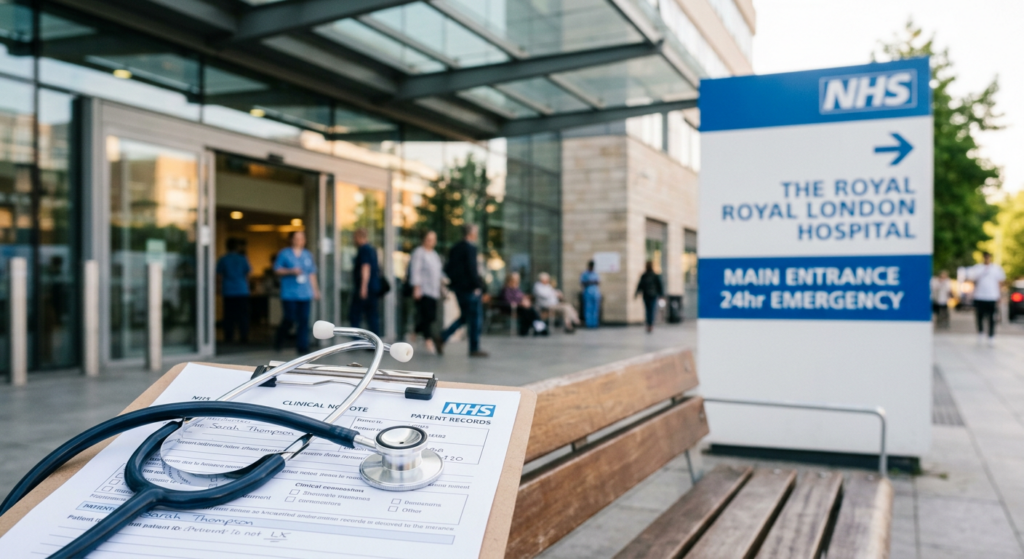
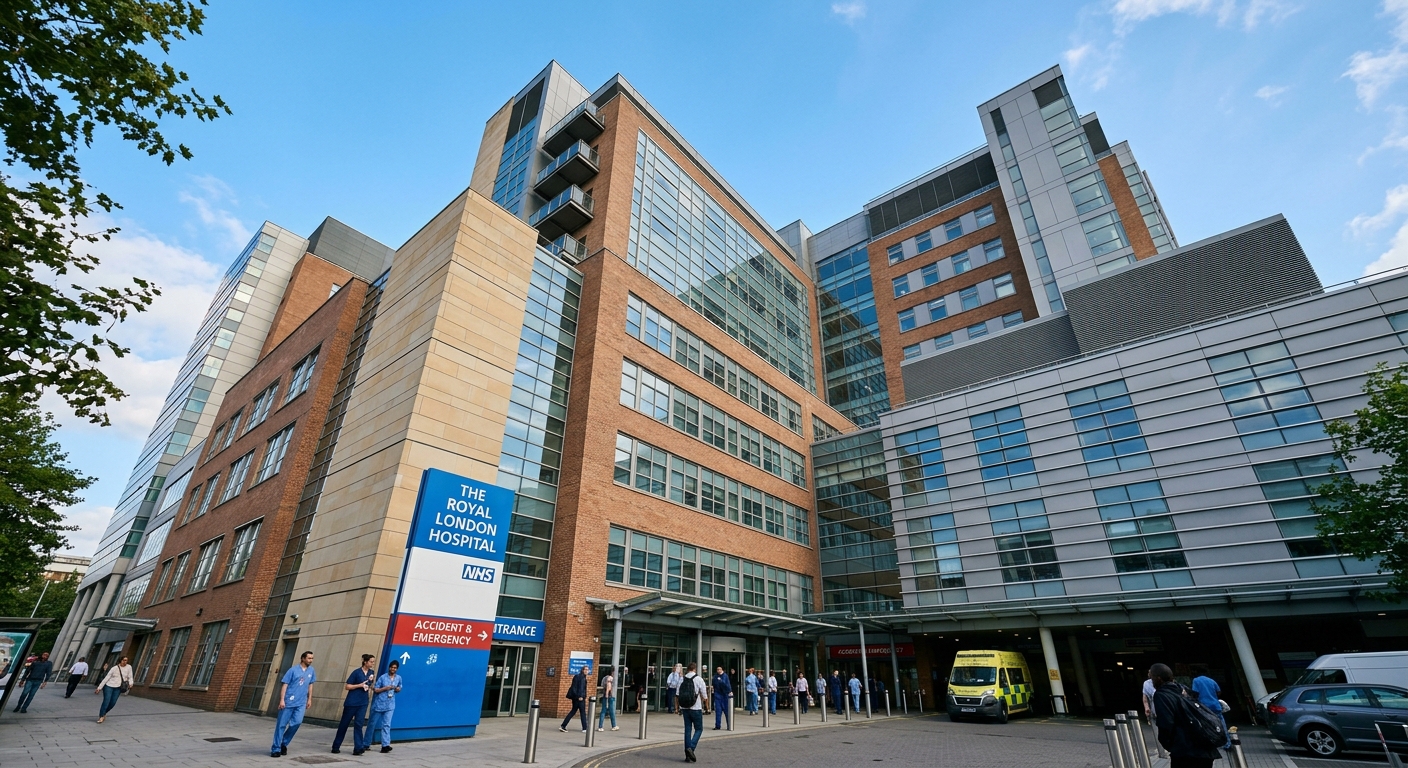
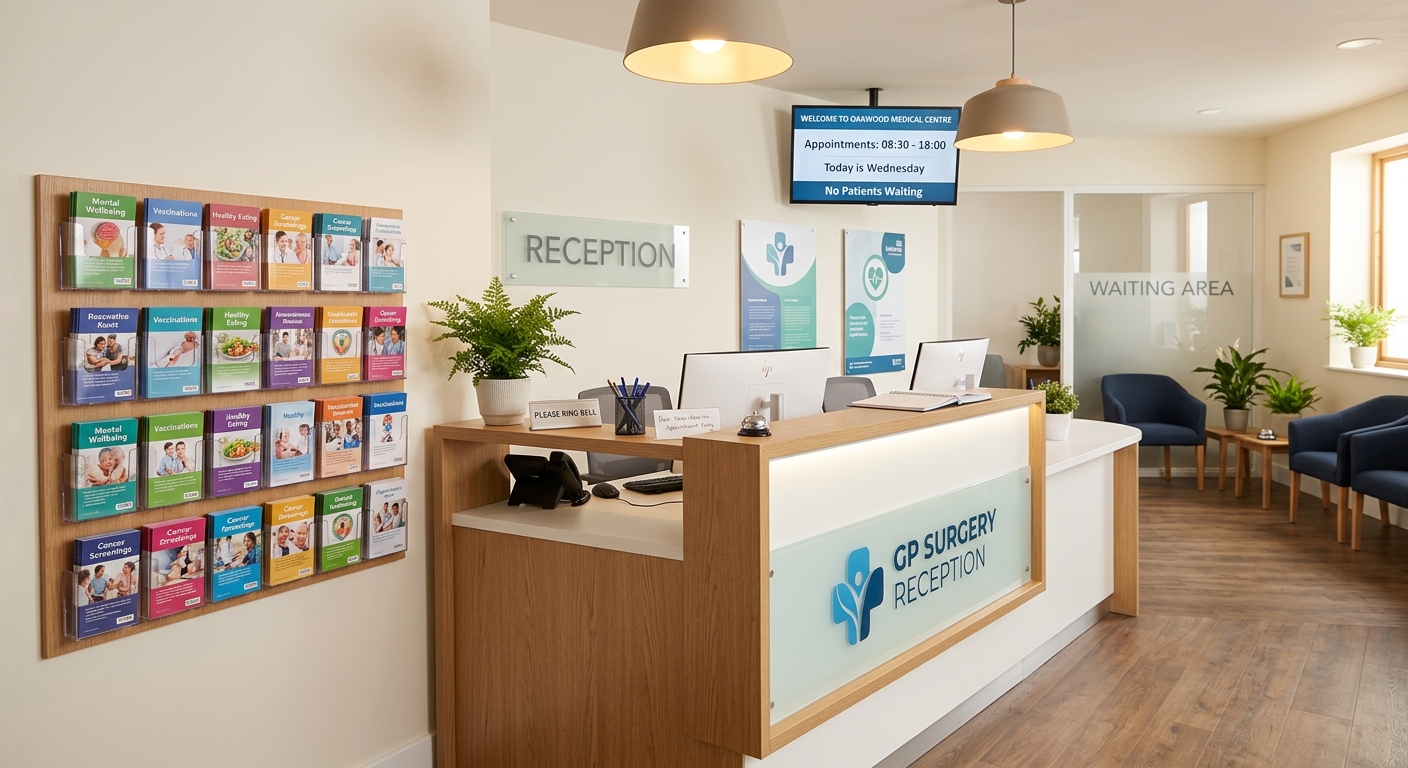
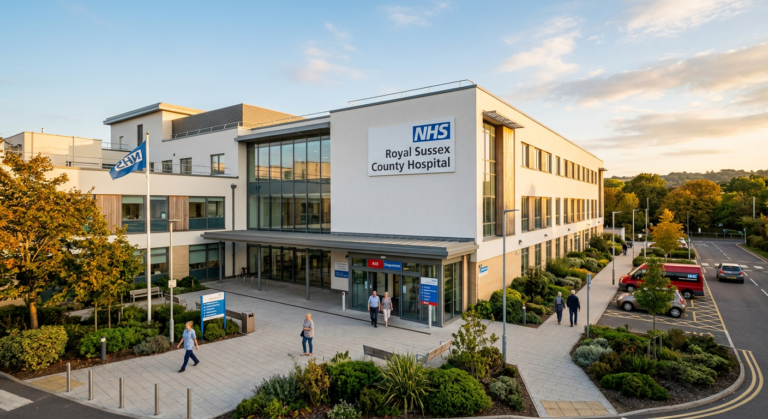
Modern NHS hospital exterior representing healthcare entitlement for international studentsUK GP surgery reception interior where international students register
How to Register with a GP (Do This in Your First Week)
Registering with a GP — a General Practitioner, your local doctor — is the single most important admin task after you arrive. Without a registered GP, getting non-emergency care becomes painful: you’ll be bounced to walk-in centres or charged for private appointments.
The five-minute version
Find a GP surgery near your term-time address using the NHS website’s postcode search.
Most surgeries now let you register online — you’ll fill in a GMS1 form digitally.
You’ll need: passport, BRP or eVisa share code, proof of address (tenancy agreement or university letter), and your university enrolment confirmation.
You do not need an NHS number to register. They’ll assign you one.
Registration usually takes 1–2 weeks. You’ll get a letter confirming your NHS number.
What if a surgery says it’s “full”?
You have the legal right to register at any GP within their catchment area. If you’re refused without a valid reason (full lists, outside catchment), try another. Many universities also have a dedicated student health service — these are usually the easiest route in.
For example, a Master’s student arriving in Manchester in September might register with the University of Manchester Health Service in week one, then never need to think about it again until they catch the inevitable freshers’ flu in October.
Prescriptions: The £9.90 Charge Nobody Warns You About
Here’s the thing that surprises most international students: NHS prescriptions in England are not free. As of April 2026, the standard charge is £9.90 per item, regardless of what the medication actually costs the NHS. A box of antibiotics that costs the NHS 80p still costs you £9.90.
How to pay less
Prescription Prepayment Certificate (PPC): £32.05 for 3 months or £114.50 for 12 months. Worth it if you need more than one item a month.
Buy over-the-counter instead: Paracetamol, ibuprofen, hay fever tablets, and many basics are cheaper at Boots, Superdrug, or Tesco than the prescription charge.
Study in Scotland, Wales or Northern Ireland: Prescriptions are completely free. Yes, really.
Who’s exempt
Under-19s in full-time education get free prescriptions. So do pregnant students and those who’ve given birth in the last 12 months (you’ll need a maternity exemption certificate). Students with certain long-term conditions like diabetes or epilepsy also qualify.
This regional difference matters more than people realise — if you’re weighing up locations, our breakdown of Manchester vs Birmingham vs Glasgow for student value touches on how Scotland’s free prescriptions add up over a four-year degree.
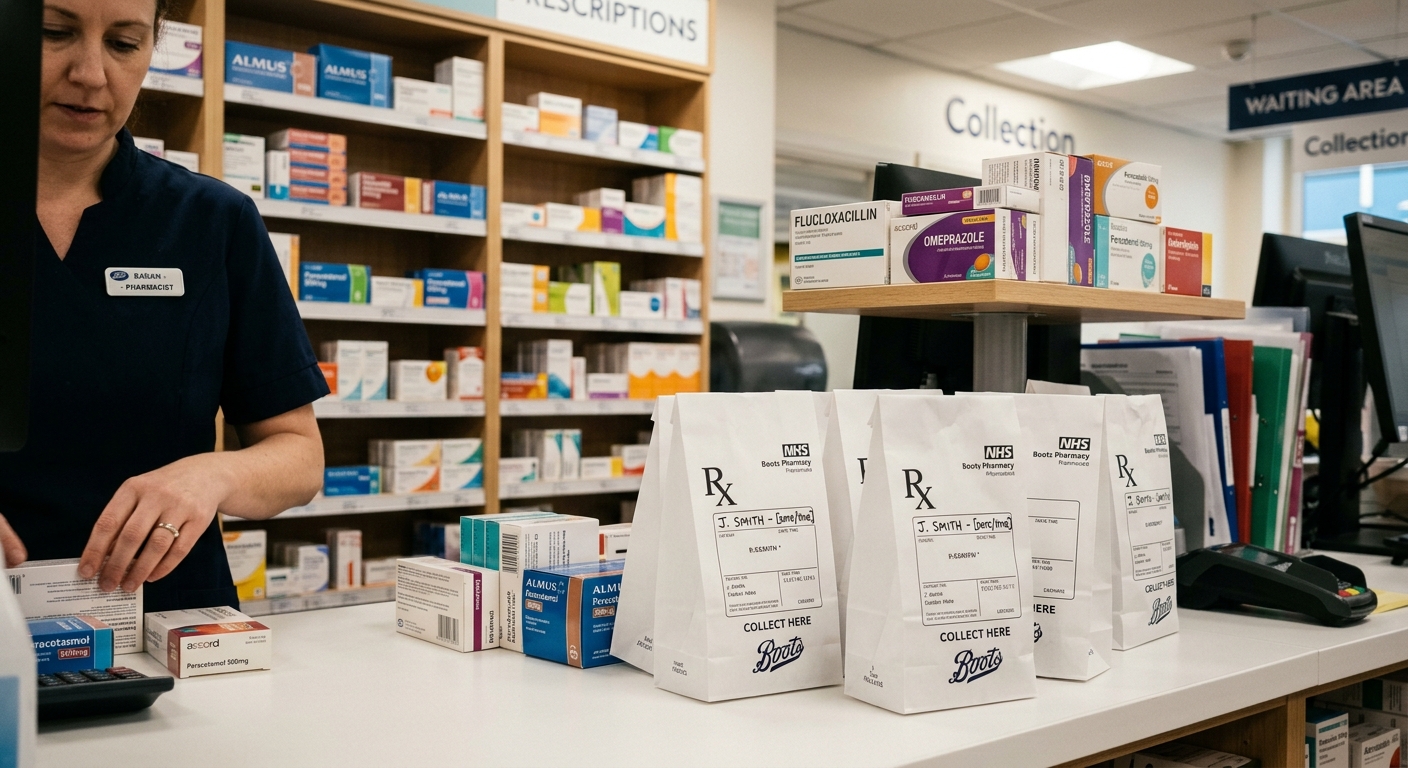
UK pharmacy counter with prescription bags illustrating NHS prescription charges
Dental and Eye Care: Bring Your Wallet
This is where the NHS gets less generous. Dental and optical care are partially subsidised but not free for adult students.
NHS dental charges in England (2026)
Band 1 — £26.80: check-up, X-rays, advice, polish.
Band 2 — £73.50: fillings, extractions, root canal.
Band 3 — £319.10: crowns, dentures, bridges.
The catch? Finding an NHS dentist accepting new patients is genuinely hard in 2026. Many students end up going private, where a check-up runs £45–£80 and a filling can easily hit £150. Book your NHS dentist early — ideally in your first month.
Eye tests and glasses
NHS-funded eye tests are free in Scotland for everyone. In England, students typically pay around £25 unless you qualify under specific health criteria. Glasses are not covered — budget £60–£200 for frames and lenses at a high-street optician.
A practical tip: if you wear glasses or contacts, get an up-to-date prescription before you leave home and bring a spare pair. It’s almost always cheaper than replacing them here.
Mental Health Support: Free, But Expect a Wait
NHS mental health services are free at the point of access, but waiting lists are the longest of any NHS service. Talking therapy referrals through the NHS Talking Therapies programme (formerly IAPT) currently average 6–12 weeks for a first assessment, longer for ongoing sessions.
For international students, the fastest routes are usually:
Your university counselling service — free, no GP referral needed, typically 1–3 week wait. This should be your first call.
Self-refer to NHS Talking Therapies — you don’t need to go through a GP. Search “NHS Talking Therapies” plus your city.
Samaritans (116 123) — free, 24/7, anonymous. Not therapy, but a real person to talk to in a crisis.
Student Space and Togetherall — free online peer support designed for UK students.
If you’re in immediate danger or having thoughts of self-harm, A&E is free and they will see you. The IHS covers this fully.
Calm counselling room representing free NHS mental health support for students
When to Use 111, 999 or Walk-In Centres
Most international students default to A&E because that’s what they’d do back home. Don’t. A&E wait times in 2026 routinely hit 6+ hours for non-urgent cases, and you’ll be triaged behind anyone in genuine emergency.
Use the right entry point
GP appointment — ongoing issues, repeat prescriptions, anything not urgent.
NHS 111 (call or 111.nhs.uk) — when you’re not sure what to do. Free, 24/7, and they can book you into urgent care directly.
Pharmacy — minor illnesses (cold, mild rash, UTI in some cases). Pharmacists can now prescribe for seven common conditions under the Pharmacy First scheme.
Urgent Treatment Centre / Walk-in Centre — sprains, minor injuries, infections needing same-day attention.
A&E or 999 — chest pain, severe bleeding, loss of consciousness, suspected stroke, severe allergic reaction.
For example, a student who wakes up with a sore throat and a fever shouldn’t head to A&E. A quick call to 111 or a chat with the pharmacist at Boots will sort most cases in under an hour — and often without a prescription charge at all.
What’s Actually Free vs What Catches Students Out
Here’s the cheat sheet most universities don’t hand out clearly enough.
Genuinely free
GP appointments and referrals
Hospital treatment after referral
A&E and ambulance
Maternity care (antenatal, birth, postnatal)
Contraception and sexual health clinics (including STI testing)
Vaccinations on the NHS schedule, including flu jabs for at-risk students
Mental health crisis services
You’ll pay extra
Prescriptions in England (£9.90/item)
NHS dental treatment (£26.80–£319.10)
Eye tests and glasses in England
Wigs and fabric supports
Medical certificates for non-NHS purposes (e.g. visa extensions, insurance claims) — your GP can charge £20–£100
Travel vaccinations not on the NHS list (yellow fever, Japanese encephalitis)
One often-missed point: if you take time off uni for illness and the university asks for a medical certificate, the GP may charge you privately. Always ask the university whether their own self-certification form is acceptable first.
Practical Setup Checklist for Your First Month
Treat NHS setup like opening a bank account or getting a SIM — it’s basic admin that pays back fast. Here’s the order we’d do it in:
Week 1: Register with a GP near your accommodation. Online registration is fastest.
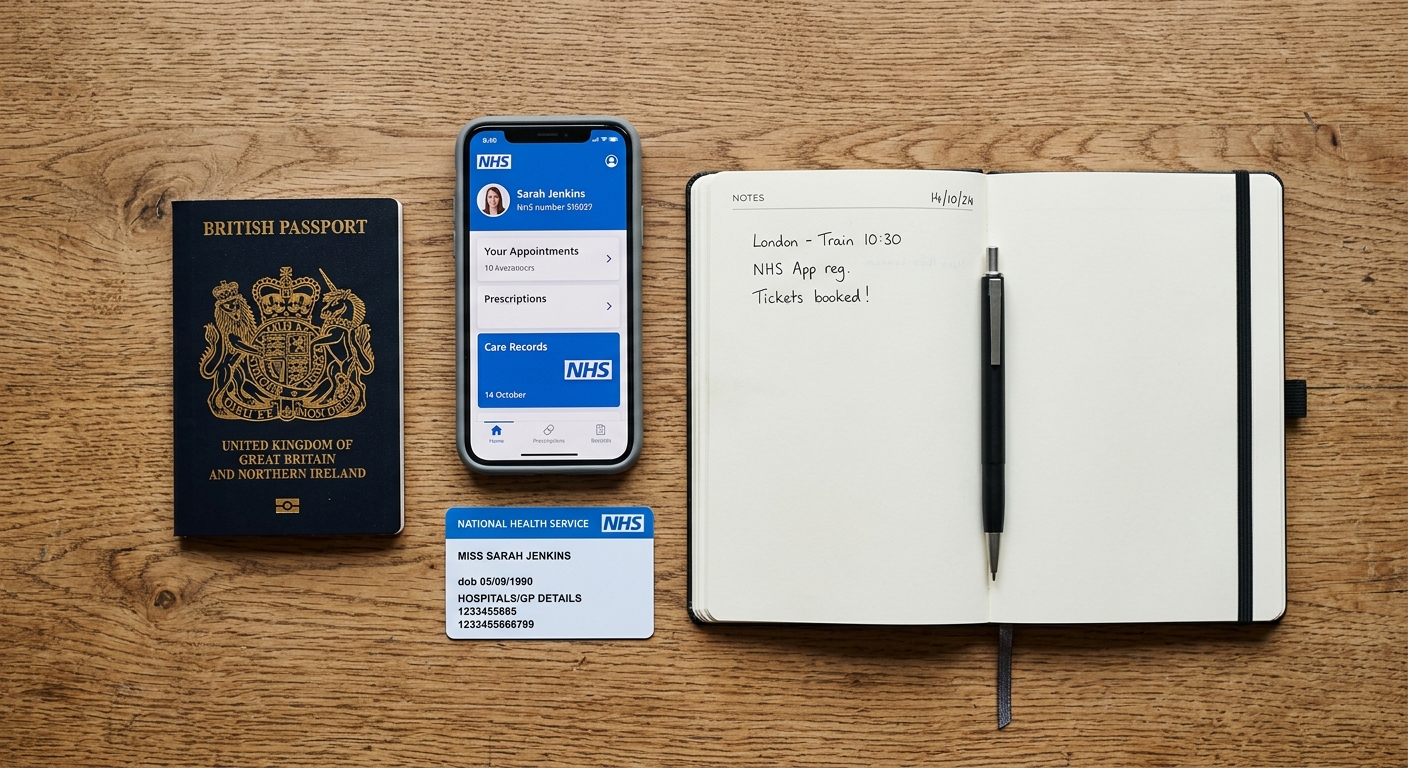
Week 1: Save 111 in your phone. Bookmark the NHS app and download it — you can order repeat prescriptions and view your record there.
Week 2: If you take regular medication, request a transfer of records or bring a translated prescription from your home country to your first GP appointment.
Week 2: Find an NHS dentist accepting new patients. Yes, before you have a problem.
Month 1: If you need more than one prescription a month, buy a 12-month PPC — it pays for itself after 12 items.
Month 1: Note your university’s counselling service contact details. You may never need them, but you’ll be glad they’re saved.
Sorting healthcare admin alongside opening a UK bank account and figuring out part-time work rules in your first fortnight will save you genuine stress later.
Flat lay of essentials including NHS app on phone for international student arrival
Getting Settled Without the Stress
The NHS is one of the genuine perks of studying in the UK — once you’ve paid the IHS, you’ve effectively prepaid for a healthcare system that would cost you thousands elsewhere. The traps are small but real: prescription charges in England, dental backlogs, and the temptation to default to A&E when 111 or a pharmacist would do the job in a fraction of the time.
Register with a GP in your first week, get the NHS app on your phone, and you’ve handled 80% of the work. The rest is just knowing which door to knock on when something goes wrong.
If you’d like a hand mapping out the bigger picture — choosing a university, sorting your visa, or planning the first month after you land — our team at Eduviai walks international students through it every year. Take a look at how we work or get in touch if you want a real person to answer your questions.
Sophia Tan
Sophia Tan is an international education consultant at Eduviai. Having studied and worked across three UK cities herself, she writes practical guides that help students weigh tuition, lifestyle, and career outcomes side by side. When she's not advising applicants, she's usually testing out new student cafés in Manchester's Northern Quarter.
Tell us a bit about your child and what you're looking for. We'll help you explore schools that match your requirements, whether you already have a shortlist or you're just starting.

 About UsHonest, expert guidance for international families. Never commission-driven.Discover
 How We WorkFrom your first visit to the first day at school, we guide every step.Discover
 Application GuideFrom documents to offer letter, the UK application process made clear.Discover
 Our PriceOne straightforward service fee. No school commissions, ever.Discover
 Testimonials1,200+ students from 40+ countries. Read their stories.Discover
 Behind the PlatformMeet the team behind EduviaiDiscover
 Find a SchoolTell us about your child and we’ll match you with verified UK schools that fit.Discover
 To study in the UKFrom age 4 to postgraduate, every stage, qualification, and admissions route explained.Discover
 Life in the UKAccommodation, culture, transport, and budgeting for international students, all in one place.Discover