How Much Does a Weekly Food Shop Really Cost in the UK in 2026? A Student’s Breakdown by Supermarket
By Sophia Tan
May 15, 2026
A realistic weekly food shop for a UK student in 2026 costs around £32–£45 if you cook most meals at home, with Aldi and Lidl sitting at the cheaper end (£32–£35) and Tesco, Sainsbury’s, and Morrisons landing closer to £40–£45 for the same basket. Splash out at Waitrose and you’re looking at £55+ for almost identical groceries. The supermarket you choose matters more than most students realise — over a nine-month academic year, the gap between Aldi and Sainsbury’s adds up to roughly £450.
The Average UK Student Food Budget in 2026
Most international students arriving in the UK budget about £40 a week for groceries — and that figure still works in 2026, just barely. Food inflation has cooled to around 2.8% year-on-year (down from the brutal 9%+ of 2023), but cumulative price rises mean a basket that cost £30 in 2021 now costs closer to £42.
Realistically, here’s how the spread looks for a single student cooking 5–6 dinners at home plus breakfasts and lunches:
Bare minimum (rice, pasta, frozen veg, eggs): £22–£28/week
If you’re spending more than £60 without dietary requirements, you’re almost certainly leaking money on convenience food or shopping at the wrong place. The good news: fixing that is mostly about where you walk through the doors, not heroic self-discipline.
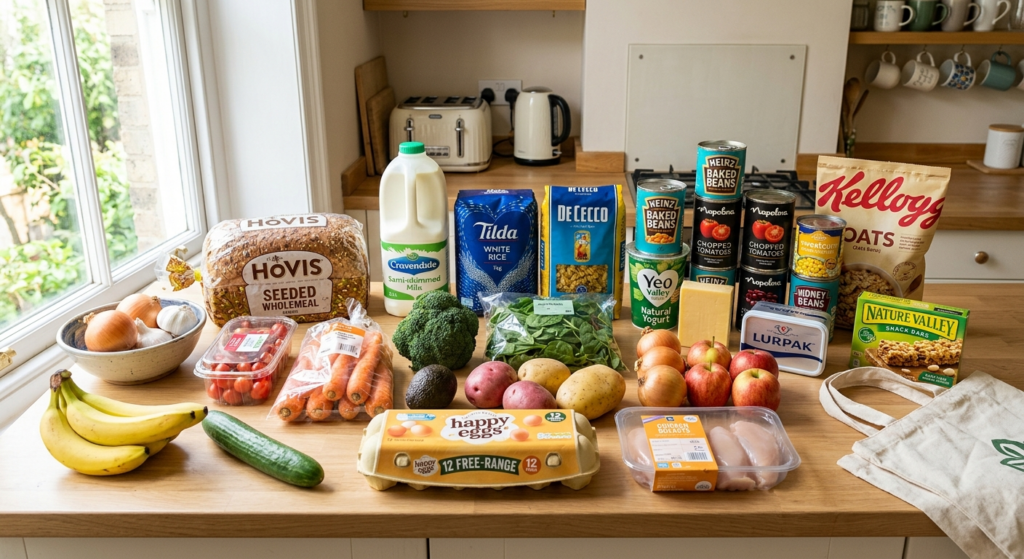
A typical weekly grocery haul for a UK student on a wooden kitchen surface
Aldi and Lidl: The Undisputed Budget Winners
If saving money is your priority, the debate ends here. Aldi and Lidl consistently come in 18–25% cheaper than the “big four” on a like-for-like basket, and their own-brand quality has quietly become excellent.
What you’ll actually pay
A typical Aldi shop for a student — pasta, rice, frozen chicken, mince, tinned tomatoes, eggs, milk, bread, oats, fruit, frozen veg, and a couple of snacks — comes to around £32. The identical basket at Tesco is closer to £42. That’s £10 a week, or £40 a month, for walking into a different shop.
The catch
Aldi and Lidl don’t stock everything. You’ll struggle to find specific branded sauces, niche international ingredients, or specialist dietary products. Many students do an “Aldi base shop” once a week and then top up at a Sainsbury’s Local for the missing bits — which is genuinely the cheapest sustainable strategy.
For example, a Master’s student in Sheffield I spoke with does her main shop at Lidl every Sunday (£28–£32), then grabs soy sauce, tofu, and rice noodles from a Chinese supermarket once a month. Her total monthly grocery spend? £145. That’s less than half what some of her flatmates pay shopping exclusively at Sainsbury’s.
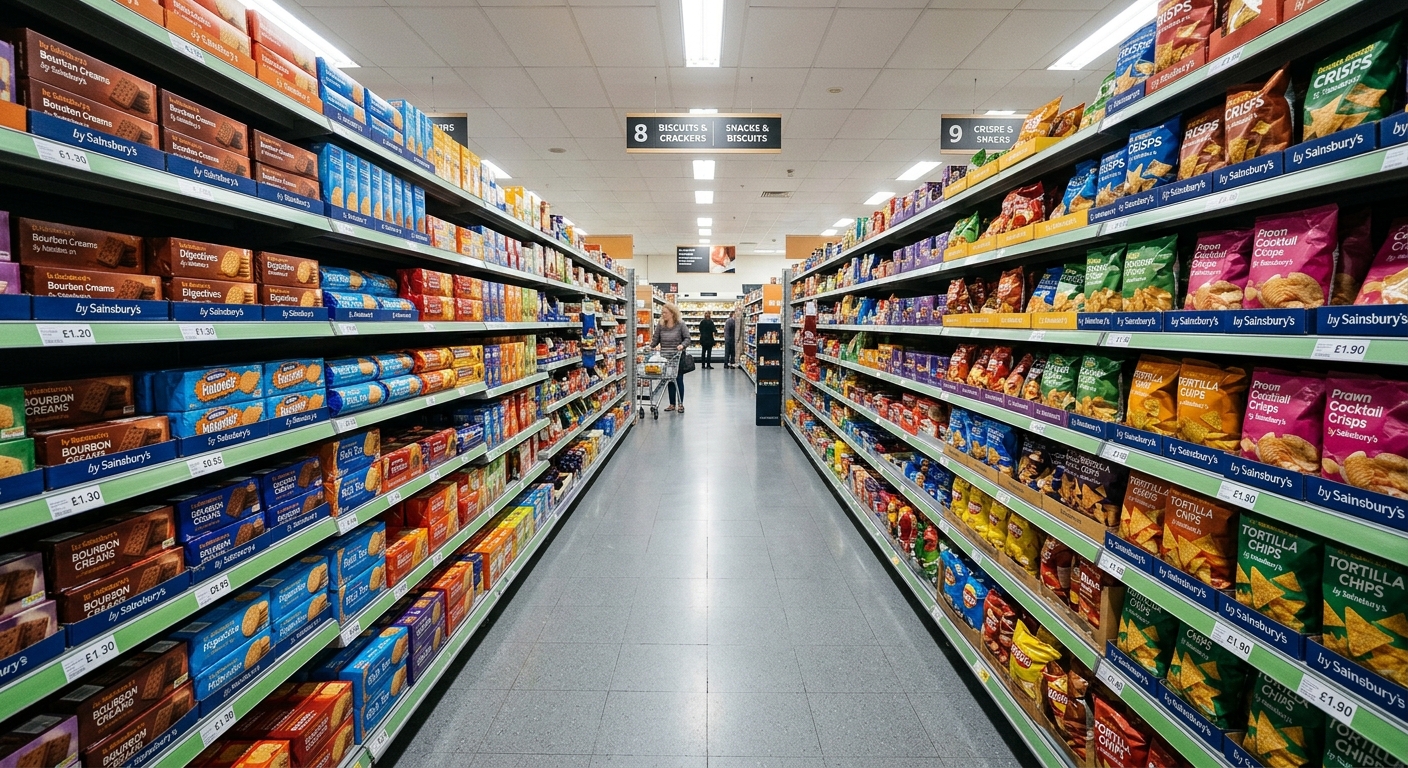
Interior of a budget UK supermarket showing own-brand products on shelves
Tesco, Sainsbury’s, Asda, Morrisons: The Big Four Breakdown
These are the supermarkets you’ll see on nearly every UK high street, and they all sit in the £38–£45 weekly range for a student shop. The differences are subtle but real.
Tesco
The most universally available. Clubcard prices are genuinely worth using — items can be 30–50% cheaper with the card, which is free. Without a Clubcard, you’re paying inflated prices for the privilege of shopping there. Get the card on day one.
Sainsbury’s
Slightly pricier than Tesco but better own-brand quality, especially for fresh produce and bakery items. Nectar Prices (their loyalty equivalent) work similarly to Clubcard. Sainsbury’s Local stores are convenient but charge a noticeable premium versus the big stores.
Asda
Often the cheapest of the big four, particularly on meat and household basics. Asda Rewards gives cashback into a “cashpot” rather than instant discounts — useful if you can resist spending it for a few months. Locations are often out-of-town though, so factor in bus fare.
Morrisons
Best fresh meat and fish counters of the big four. Slightly underrated for fruit and veg. The More Card loyalty programme is decent but less generous than Clubcard.
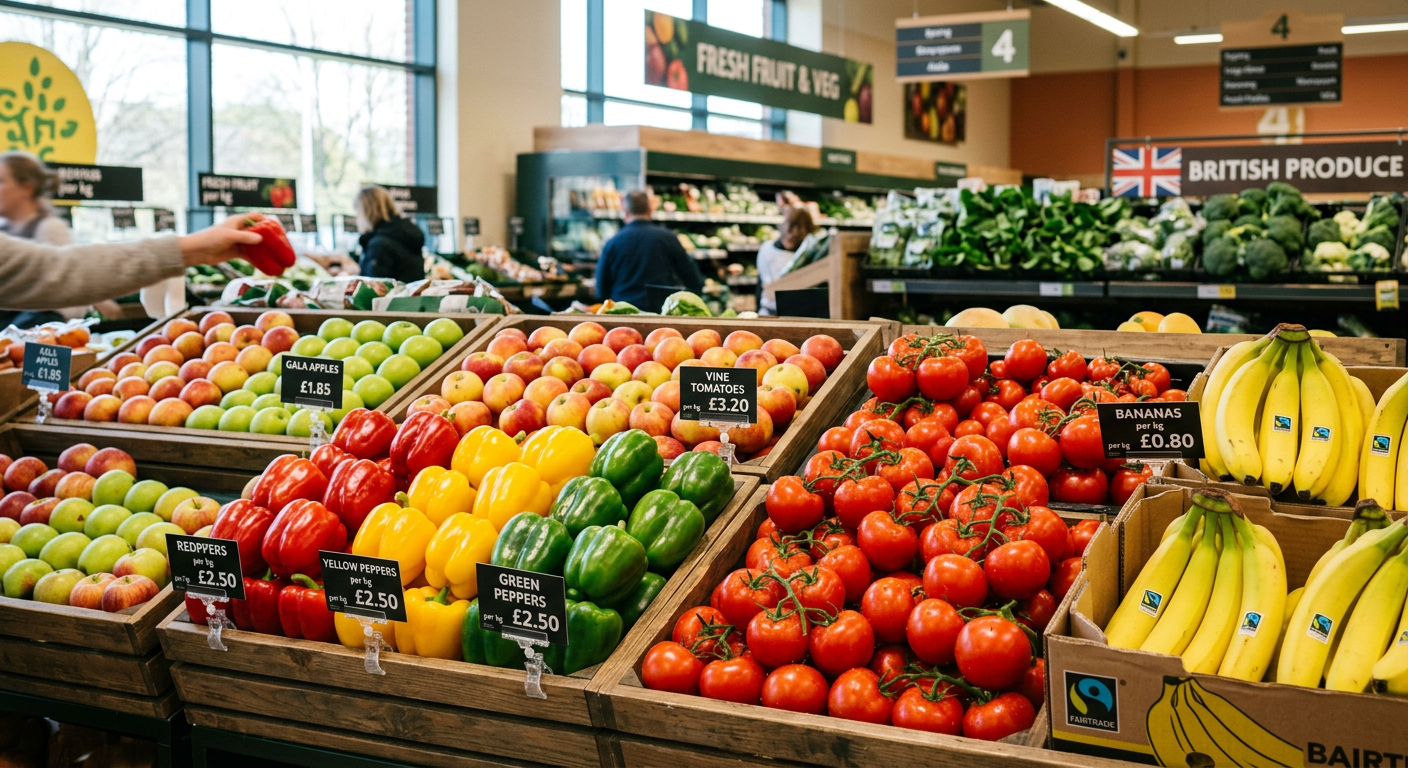
Fresh fruit and vegetables in a UK supermarket produce section
Waitrose, M&S, and Whole Foods: When Are They Worth It?
Honest answer? Rarely, if you’re on a student budget. The same basket costs 25–40% more at Waitrose than at Aldi, and the quality difference on staples like pasta, rice, and tinned goods is negligible.
That said, there are two situations where premium supermarkets make sense:
The “dine in for two” deals: M&S regularly does meal deals (starter, main, side, dessert, wine) for £12–£15. Split between two people, that’s a Friday night dinner for £6–£7.50 each — cheaper than a takeaway and significantly better.
Reduced-to-clear yellow stickers: Waitrose stickers fresh items aggressively after 7pm. Sourdough loaves that were £3.50 hit £1, prepared salads drop to 90p. If you live near one, an evening walk-by once a week is genuinely worth it.
Otherwise? Skip them for your main shop.
Hidden Costs: Loyalty Cards, Delivery Fees, and Meal Deals
The sticker price isn’t the full story. Three things quietly inflate your real grocery spend.
Not having a loyalty card
Shopping at Tesco without a Clubcard in 2026 is borderline irrational. Many shelf prices show two figures — the regular price and the Clubcard price — and the gap is often 40%+. Sign up online in five minutes; you don’t even need a physical card, just the app.
Delivery and minimum spend
Online grocery delivery is convenient but adds £3–£7 per slot, with most supermarkets requiring a £40+ minimum order. If you live close enough to walk, you’ll save money in-store and avoid the temptation to add items to hit the minimum. Delivery makes sense once a month for heavy items (rice sacks, cleaning products, drinks) and walking the rest of the time.
Meal deals are a trap
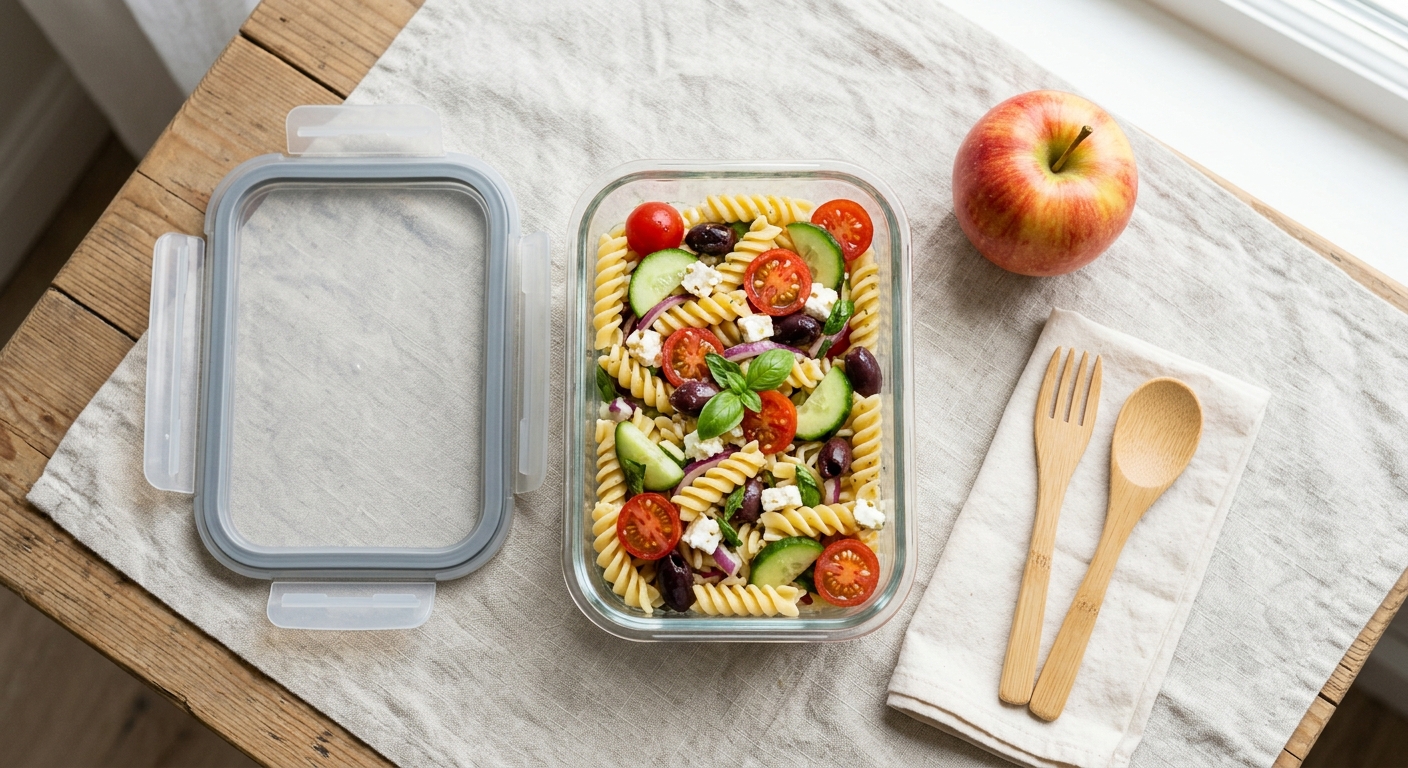
The classic £3.90 Tesco meal deal (sandwich, drink, snack) seems cheap until you do the maths: that’s £19.50/week for five workday lunches, or £78 a month. The same lunch made at home — pasta salad with chicken — costs around 90p to make. Lunch alone can swing your monthly food budget by £50+.
A homemade packed lunch in a glass container ready to take to university
Smart Shopping Strategies That Actually Work
Forget complicated couponing. These four habits do 80% of the work.
Shop once a week, with a list
The single biggest predictor of overspending is “popping in for a few things” multiple times a week. Each trip averages £8–£12 in impulse buys. One planned weekly shop with a written list cuts that completely.
Cook in batches
Make a big pot of chilli, curry, or pasta sauce on Sunday. Portion it into containers. You’ve now got 4–5 dinners for under £10 total. This is the single most powerful student money-saving habit — and it doubles as time-saving during exam periods.
Buy frozen, especially veg and fish
Frozen broccoli, peas, spinach, and berries are nutritionally identical to fresh, last for months, and cost 30–50% less. Frozen fish fillets are roughly half the price of the fresh equivalent. The cultural bias against frozen food is doing your wallet zero favours.
Learn to love own-brand
Tesco Stockwell pasta is 41p for 500g. Branded pasta in the same aisle is £1.45. They are functionally identical. The same logic applies to tinned tomatoes, rice, flour, oats, milk, and 90% of the basics.
A Realistic Weekly Meal Plan Under £35
Here’s what £35 at Aldi actually buys for one student in 2026 — enough for 7 breakfasts, 7 lunches, and 5 home-cooked dinners (the other two nights you’re eating leftovers or getting a cheap meal out):
1kg porridge oats — £1.09
2L milk — £2.45
Eggs (12) — £2.49
Bread (2 loaves) — £0.98
Butter — £1.79
Pasta (1kg) — £0.75
Rice (1kg) — £1.45
Tinned tomatoes (4) — £1.80
Chicken breast (1kg) — £6.49
Mince (500g) — £3.29
Onions, garlic, carrots, peppers — £3.50
Frozen mixed veg (1kg) — £1.39
Bananas, apples — £2.00
Cheese (250g) — £2.29
Tea/coffee — £2.50
Snacks/treats — £2.00
Total: £34.26
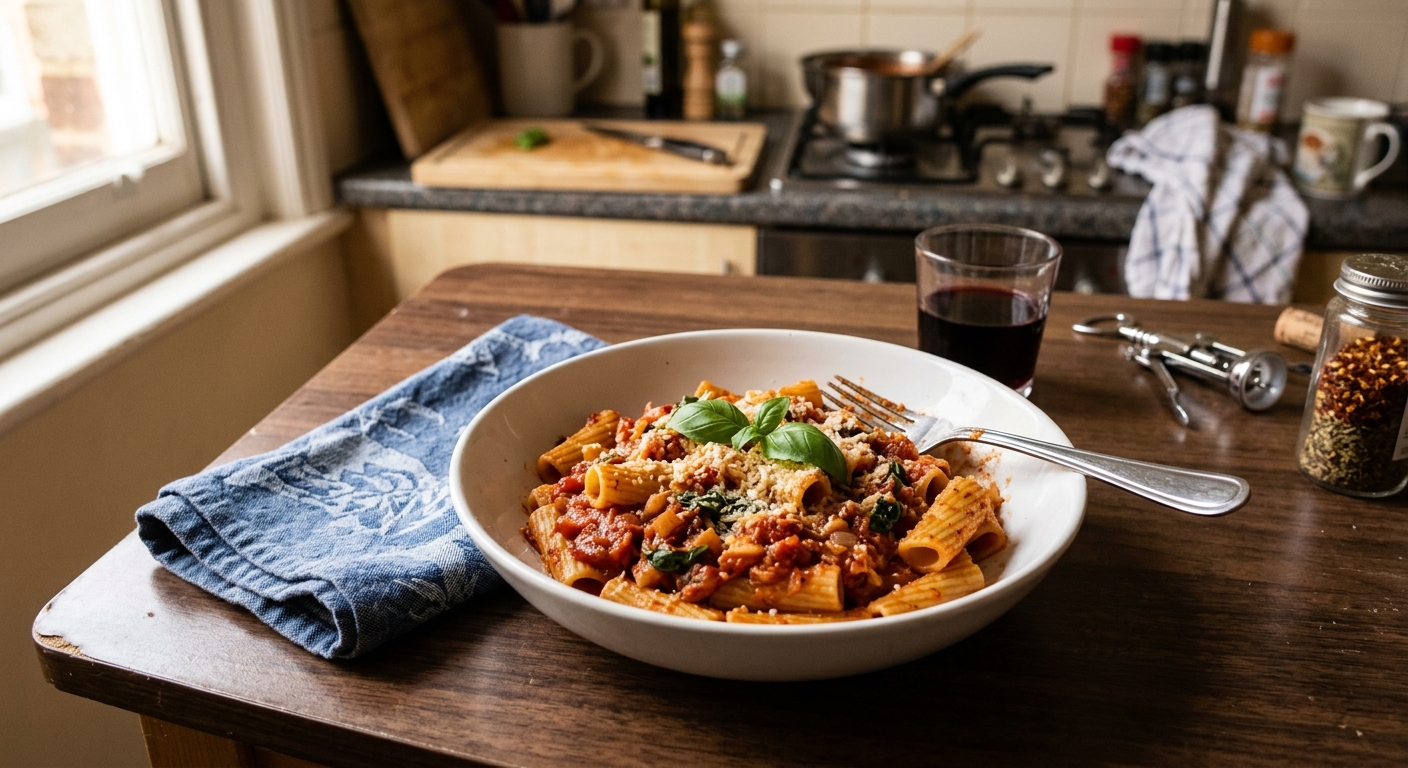
Meals from this: porridge breakfasts, sandwich or pasta lunches, chicken stir-fry, spaghetti bolognese, chicken curry with rice, omelette with veg, and a chilli that does two nights. Real food, no suffering, sub-£35.
A simple budget-friendly pasta meal in a student kitchen
How Food Costs Vary by UK City
Supermarket prices are roughly the same nationwide — a Tesco loaf is a Tesco loaf whether you’re in Cardiff or Newcastle. But two things vary by city: store density and access to cheap markets.
London has the most expensive convenience stores (Tesco Express in Zone 1 charges noticeably more than a Tesco Extra in the suburbs) but also the best ethnic supermarkets — Brixton, Tooting, Whitechapel, and Wood Green have markets where fresh produce costs 40–60% less than chain supermarkets.
Cities like Manchester, Birmingham, Glasgow, Leicester, and Bradford have brilliant South Asian and African-Caribbean grocery scenes — a 5kg bag of rice for £6, fresh coriander for 50p, spices in bulk. If you cook a lot of rice-based meals, these shops alone can knock £15+ off your weekly spend. We compared the broader cost picture in our Manchester vs Birmingham vs Glasgow value guide if you’re still choosing where to study.
Smaller university towns (Durham, St Andrews, Bath) have less competition between supermarkets, so prices tend to creep up and Aldi/Lidl may not be within walking distance. Budget accordingly.
Putting It All Together: Your Monthly Food Budget
If you take just three things from this article, make them these: get the loyalty card on your first shop, do one planned weekly trip to Aldi or Lidl, and cook in batches. Do those three things and your food budget will sit comfortably at £140–£160 a month — roughly half what students who shop reactively at convenience stores end up paying.
Food is one of the few major expenses you can genuinely control as a student. Rent is fixed, tuition is fixed, transport is mostly fixed. Groceries are where small habits compound into real savings — £40 a month is £360 over an academic year, which is a flight home or a week’s travel in Europe.
For more on managing money, work rules, and life in the UK, browse our Expert Guide to Study in the UK, or check the part-time work rules for student visa holders if you’re looking to top up your budget. And if you’re still deciding where to study, our advisers at Eduviai can help you match the right university with a city that fits your budget.
Sophia Tan
Sophia Tan is an international education consultant at Eduviai. Having studied and worked across three UK cities herself, she writes practical guides that help students weigh tuition, lifestyle, and career outcomes side by side. When she's not advising applicants, she's usually testing out new student cafés in Manchester's Northern Quarter.
Tell us a bit about your child and what you're looking for. We'll help you explore schools that match your requirements, whether you already have a shortlist or you're just starting.

 About UsHonest, expert guidance for international families. Never commission-driven.Discover
 How We WorkFrom your first visit to the first day at school, we guide every step.Discover
 Application GuideFrom documents to offer letter, the UK application process made clear.Discover
 Our PriceOne straightforward service fee. No school commissions, ever.Discover
 Testimonials1,200+ students from 40+ countries. Read their stories.Discover
 Behind the PlatformMeet the team behind EduviaiDiscover
 Find a SchoolTell us about your child and we’ll match you with verified UK schools that fit.Discover
 To study in the UKFrom age 4 to postgraduate, every stage, qualification, and admissions route explained.Discover
 Life in the UKAccommodation, culture, transport, and budgeting for international students, all in one place.Discover